Walk through a sample investigation (Case #Q-2026-0142) from start to finish: workspace isolation, Stage 0 secret redaction, cross-repository taint tracing, false-positive filtering across Gates A–H, and automatic Stage ∞ verification when the fix is merged.
Questor operates either as a multi-tenant cloud service with server-enforced query scoping or as a dedicated single-tenant instance inside your own private cloud. Every scan workspace, signing key, and database record is scoped strictly to your organisation.
Sign in with your Questor Account or enterprise Entra ID / Okta OIDC provider into four role-based permissions:
Repositories, scan artifacts, and case records are strictly isolated per organisation across both cloud and private deployments.
Enter a GitHub URL and select “Also scan related repositories”. Before any model prompt is
built, deterministic Stage 0 redaction replaces keys, passwords, certificates, and .env secrets with typed placeholders.
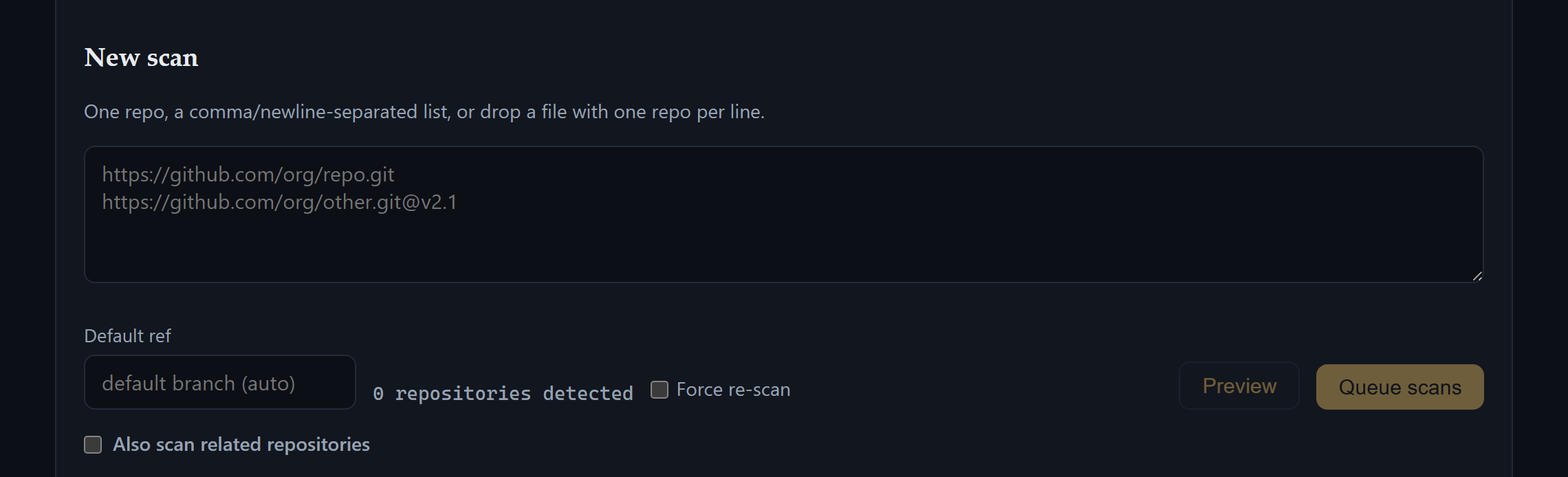
Scans run in a strictly read-only sandbox with no repository writes, no target code execution, and Stage 0 credential redaction.
Questor catalogs entry points and sinks across the workspace, matching an outbound HTTP call in acme/api-gateway to its downstream handler and SQL sink in acme/orders-service. Select any repository node below to inspect the recorded trace:
Untrusted filter parameter enters GET /api/orders and is forwarded over an outbound HTTP request to the internal orders-service.
// api-gateway/src/routes/orders.js:18
export async function listOrders(req, res) {
  return http.get(`${ORDERS_SVC}/internal/orders?filter=${req.query.filter}`); // ← TAINT SOURCE
}
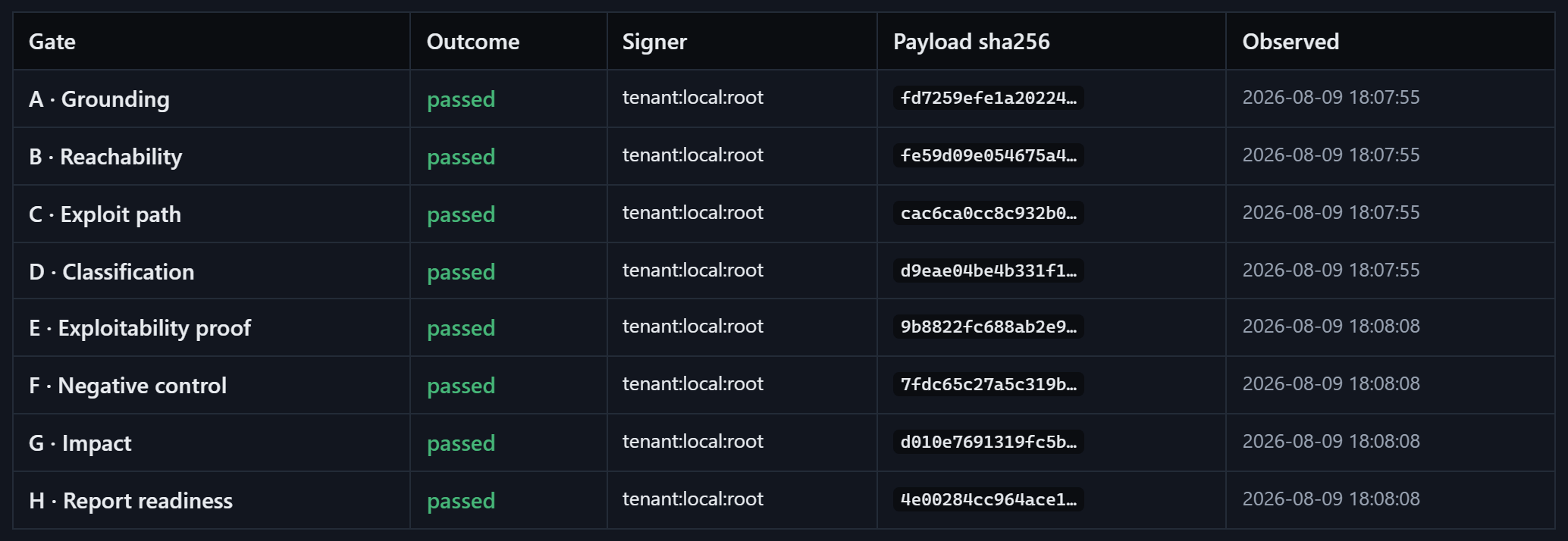
Initial model findings are treated as unverified hypotheses. Each candidate must pass eight validation checks. Confirmed findings are signed with Ed25519 as Ready; candidates refuted by guard checks or negative controls are logged as Disproven rather than sent to developers.
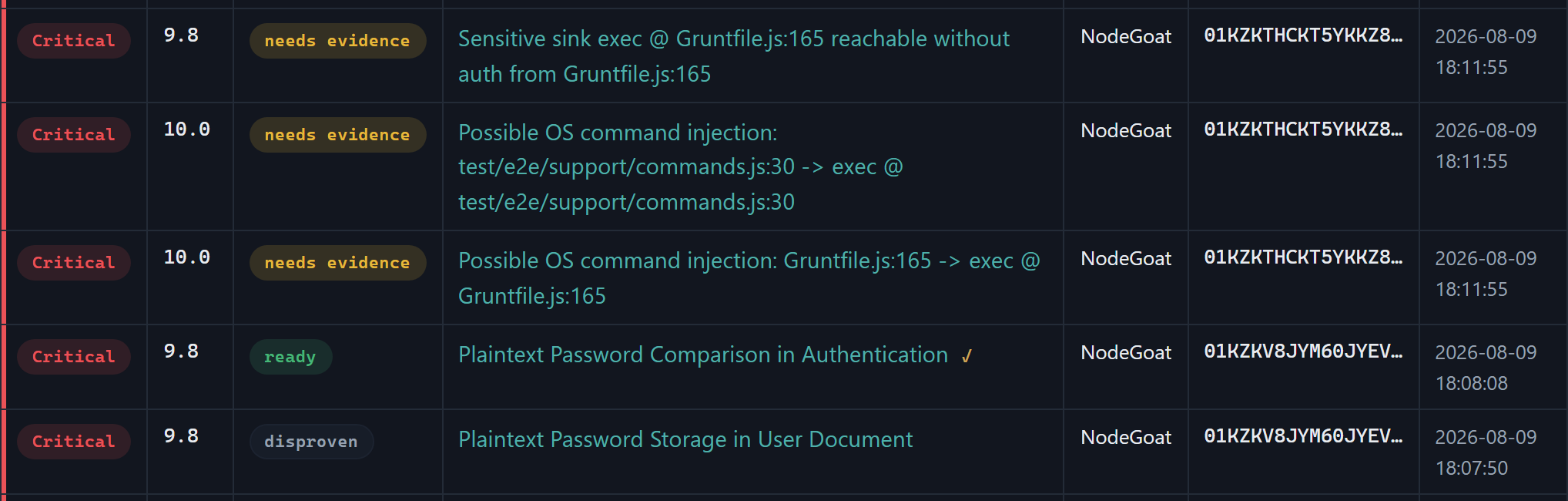
Automated negative controls filter out false positives upstream while keeping a full audit log of every dismissed candidate.
Each Ready case provides the Ed25519-signed Gate A–H ledger, the exact source-to-sink file and line trace, and a static exploitability check. After the developer merges a fix, Stage ∞ re-scans the updated commit and signs the closure record.
// app/data/user-dao.js (Line 42 · pinpointed by Gate C)- if (received === user.password) { // plaintext / weak compare+ if (await bcrypt.compare(received, user.password)) { return authenticate(user); }
Hop 1 [SOURCE] : routes/session.js:28 → req.body.password (untrusted HTTP POST)Hop 2 [PASS] : services/auth.js:64 → validateCredentials(user, password)Hop 3 [SINK] : app/data/user-dao.js:42 → direct comparison bypasses hash check
REMEDIATION : REMEDIATED (Stage ∞ Drift Retest)COMMIT_SHA : 94c10e8b2a7f4419d03e118aGATE_INF_CHECK : Prior source→sink path no longer reachableED25519_SIG : sig:ed25519:7c419b02e88a41f09d3c...91a4
Clear file-and-line root cause context up front, followed by automatic verification and case closure on re-scan.
The same signed case records power developer remediation, portfolio triage, and executive compliance reporting.
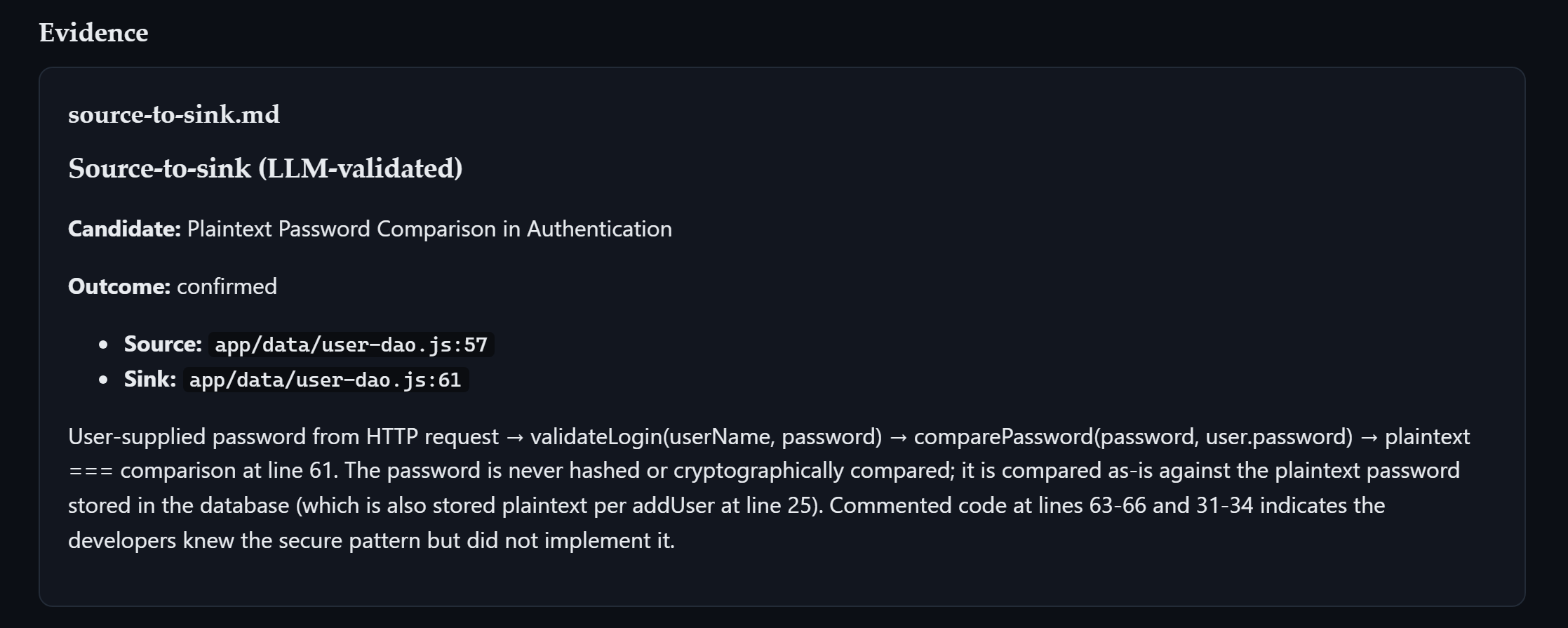
Every Ready case opens directly to the confirmed source-to-sink trace so engineers can verify the flaw in minutes and ship a fix.
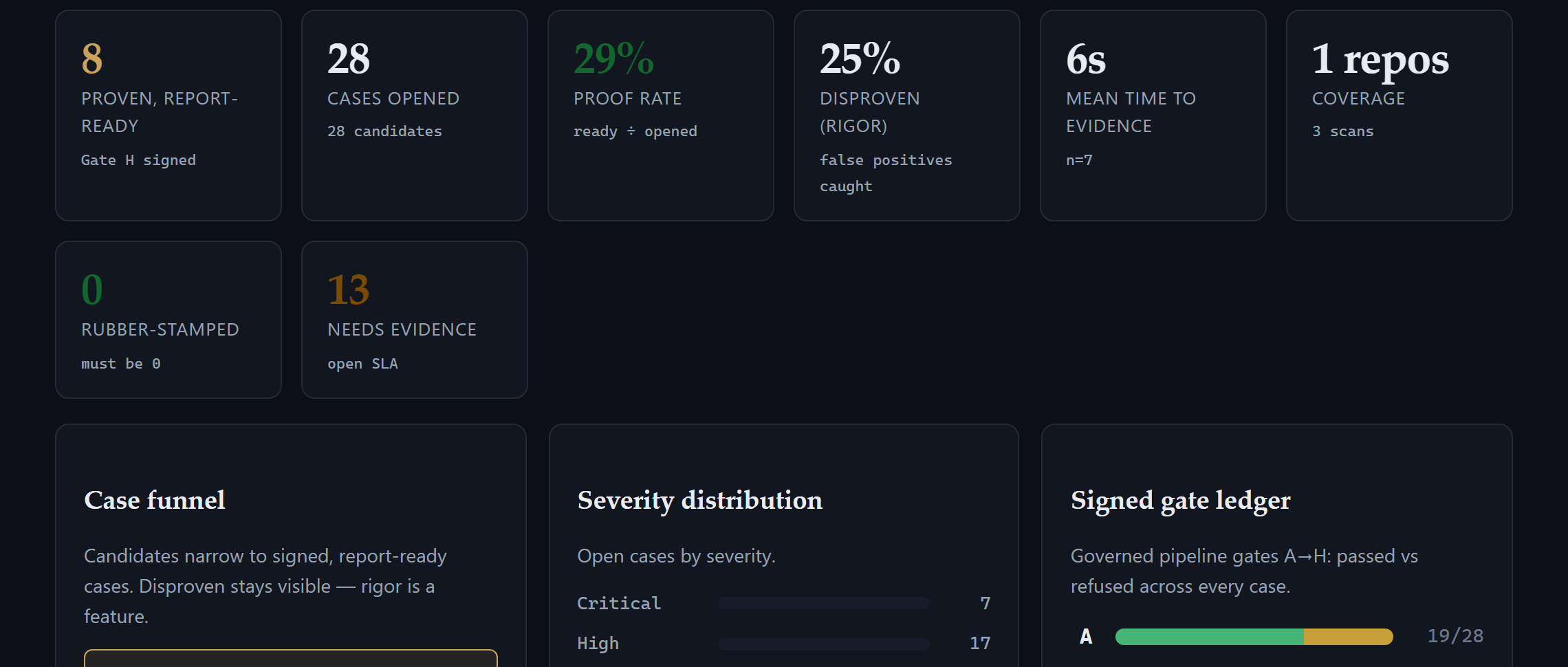
Track proof rate, mean time to evidence, and the exact percentage of candidates disproven by negative controls across your portfolio.
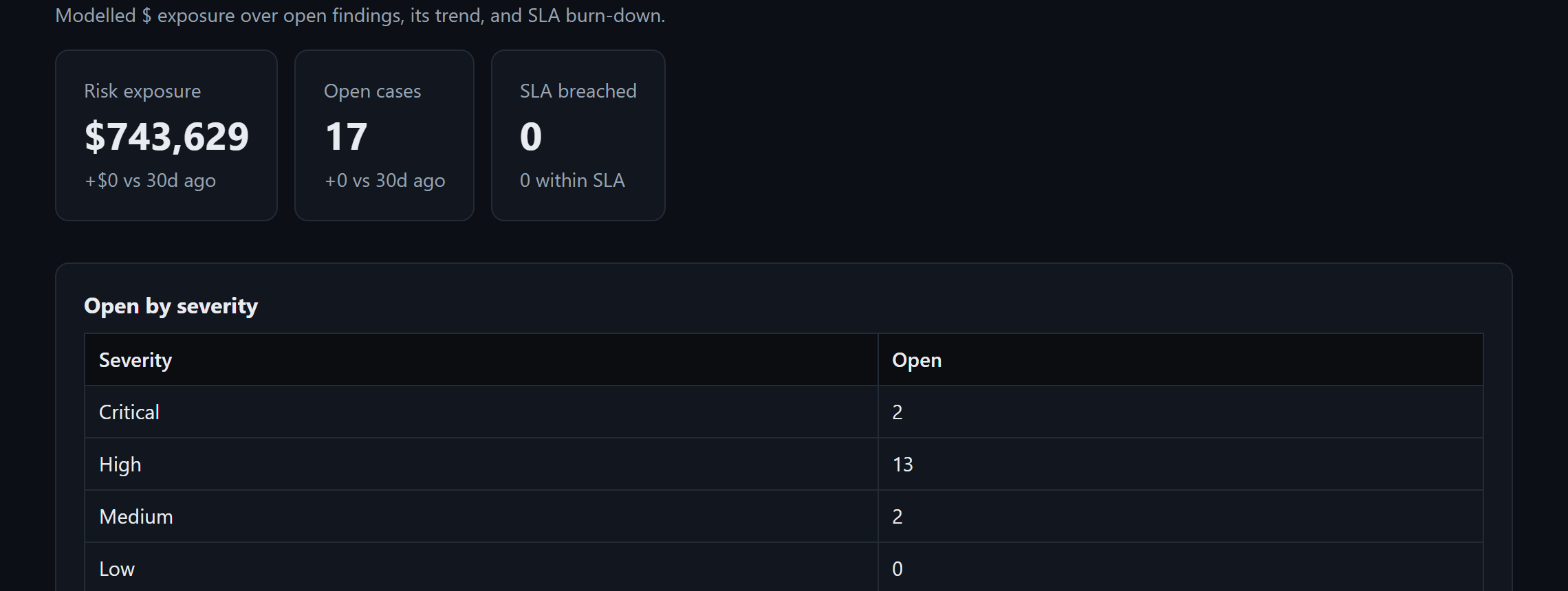
Review quantified financial exposure and compliance status where every figure links directly to an Ed25519-signed case record.
Scan a repository of your choice to inspect signed case records, source-to-sink traces, and disproven metrics on your own code. Request a live walkthrough or workspace access below.
 Questor